Discover Larkspur's Habitat Corridor
Brought to you by:


A walk through downtown Larkspur now doubles as a journey through thriving native habitat.
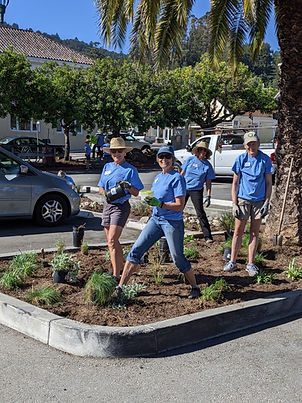
Thanks to a partnership between the Marin Chapter of the California Native Plant Society, the Larkspur Community Foundation, Refugia Marin, and the City of Larkspur, several locations around downtown Larkspur have been planted with California native plants to form a network of native pollinator gardens.


The goal: To increase biodiversity by planting essential native species in close proximity to support a rich array of local creatures.
What is a Habitat Corridor?
A habitat corridor is a series of native plant gardens that are in close proximity. These corridors help restore biodiversity by linking fragmented spaces into a thriving ecosystem.
They provide essential food and shelter as well as nesting and reproductive habitat for pollinators, birds, and butterflies. Because they are close together, the creatures that use them don’t exhaust themselves traveling long distances between food reserves.

The Larkspur Habitat Corridor

The Larkspur Habitat Corridor runs from the Central Marin Police Station to the downtown parking lot at the intersection of Ward and Magnolia.
The corridor has been under development since 2017 when Laura Lovett, a board member of the Marin Chapter of the California Native Plant Society, collaborated with the city to plant a bare garden bed across from Lark Theater. Since then, other nearby areas have reclaimed native habitat.
Every tree, shrub, and flower planted helps rebuild the connections that nature depends on. These thriving natural environments also bring beauty and joy to the heart of our city.
Larkspur Habitat Corridor Locations
Take a stroll through Larkspur and discover these special stops along your route.

Central Marin
Police Station Garden

Downtown Parking Lot

Hall Middle School
Habitat Garden

Magnolia Avenue
Poppy Corridor

Gardens
at Lark Theater

COMING 2026!
Habitat Garden at the new Larkspur Library
Look out for these signs, coming soon!
The signs will mark each connected habitat garden across Larkspur. Find them all.

Why biodiversity matters...


Biodiversity refers to the variety of living species on Earth, including plants, animals, bacteria, and fungi, as well as the communities and networks they form. Think of it as the layer of living organisms that occupy Earth’s lands and oceans. The more complex the habitat, the more resilient it is and the greater the number of creatures it will support.
This vast array of ecosystem services not only supports other creatures, but also contributes to human well-being, including food, fuel, breathable air, potable water, fertile soils, productive lands, and pollination services.
Over the last century, human activities have dramatically altered ecosystems and led to significant biodiversity loss across the planet. Key threats include habitat loss and fragmentation, unsustainable resource use, invasive species, pollution, and climate change.
These pressures have driven species decline and extinction at an alarming rate, while also affecting human health and survival.

The good news:
Native plants increase biodiversity!
We can all take actions to support species survival, and improve the health and integrity of ecosystems.
If all of us make small changes, together they become significant.
Native plants: the foundation of the food chain
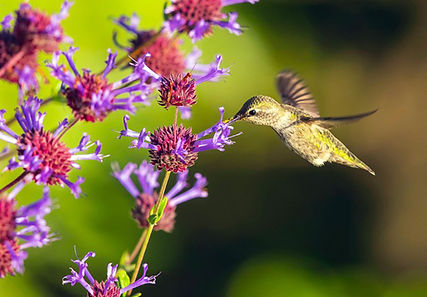
Over millions of years, plants native to the California climate have developed a mutually beneficial relationship with pollinators—producing nectar, seeds and fruit to entice pollinators to visit. When they do, they inadvertently pick up and spread pollen, thereby enabling the plant to reproduce.
Native bees overwhelmingly prefer native flowers. Their life cycles are synchronized with local bloom times, providing food when they need it most. By contrast, many imported ornamentals—such as jasmine, crape myrtle, and hydrangeas—offer little nutritional value for our pollinators.


More Reasons to Choose Native Plants
-
Support Pollinators
Bees, butterflies, and hummingbirds rely on these plants for nectar, pollen, and habitat in which to raise their young. -
Conserve Water
Native species are adapted to our climate and require one quarter of the irrigation needed by lawn grass -
Reduce Chemicals Use
No pesticides or synthetic fertilizers are needed -
Support Wildlife
Native plants provide essential food and shelter for birds, insects, and small mammals -
Provide great beauty and a deep relationship to nature
The Marin chapter of the California Native Plant Society has a wealth of plant-knowledge tailored to what works right here in Marin.
Learn more at Marin CNPS
With gratitude
This project was made possible through community efforts, local partnerships, and dedicated volunteers working to restore native habitats in Larkspur.
We owe a huge thank you to the City of Larkspur for supporting this effort.